
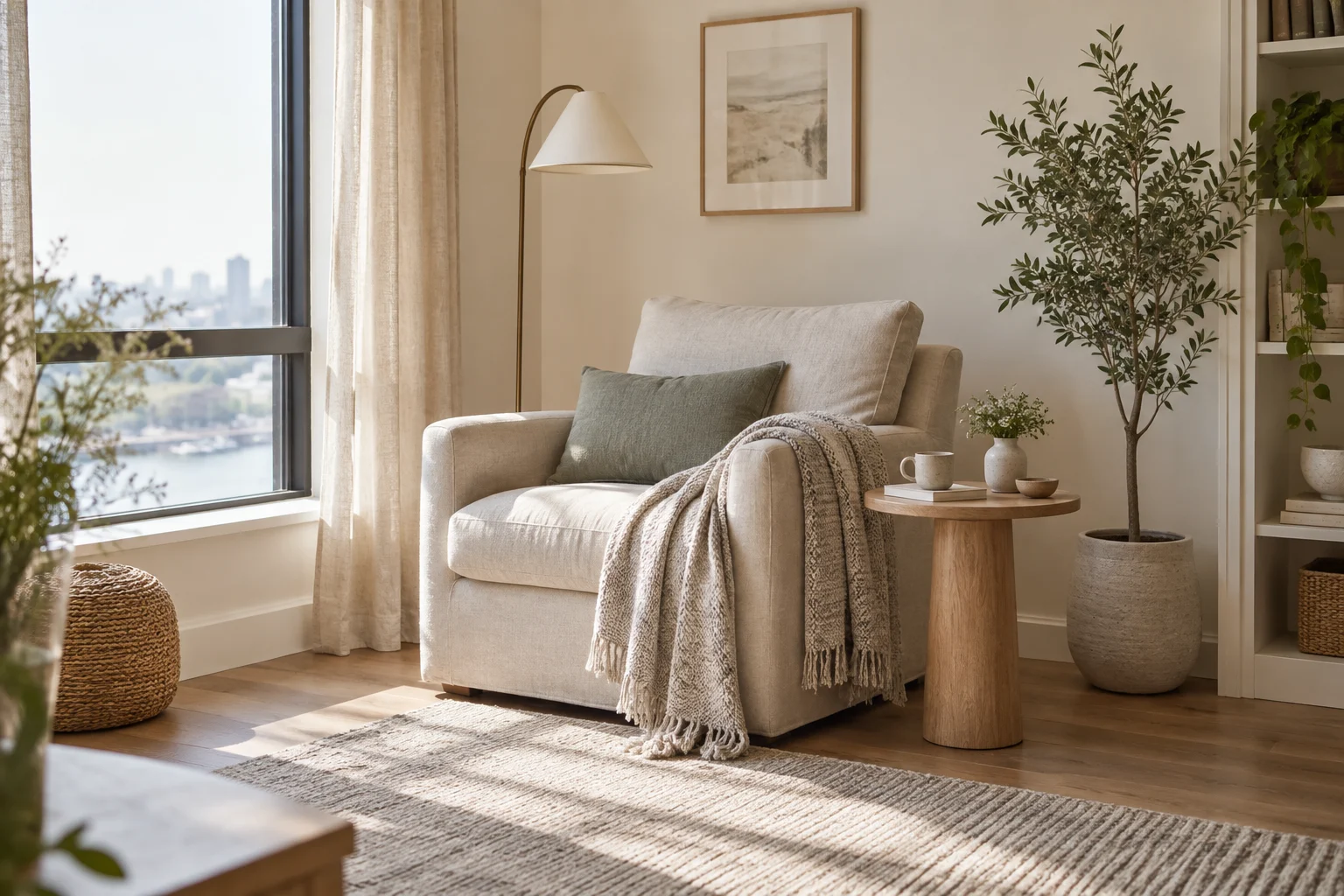
Short answer: to create a calmer, brighter corner at home, give the space one clear purpose, layer two or three kinds of light, keep the palette quiet, and leave enough empty space for the eye to rest. You do not need a full makeover. A chair, a warm lamp, one useful surface and a little editing can change how a corner feels every day.
If your challenge is making a compact living room feel more open, read our guide to making a small living room feel bigger for the layout principles that pair well with this calmer-corner approach.
The corners we use most are rarely the ones with the most decoration. They are the places that make a small promise: a few quiet pages before bed, a cup of tea in the morning, or five minutes away from a busy screen. If a corner feels flat, crowded or oddly unfinished, the answer is usually not another accessory. It is a clearer job and better balance.
Start with the feeling, not the furniture
Before you move anything, stand in the corner at the time of day you expect to use it. Notice the direction of daylight, the nearest power outlet and the path people take through the room. A beautiful chair that blocks a doorway will never feel restful, and a lamp without a convenient switch will become background clutter.
Write one sentence that describes the corner’s job: “This is where I read for twenty minutes,” or “This is a soft landing spot for the end of the day.” That sentence is a useful filter. Every object you add should support it, make it easier, or make the space feel more welcoming.
1. Choose one clear job for the corner
Calm comes from fewer decisions. Pick one primary activity and let the layout follow it. A reading corner needs a comfortable seat, a light you can aim, and a surface for the book or drink. A morning corner might need a small table, a place to set keys, and a view of the window. Trying to combine a reading nook, charging station and storage zone in one tiny area usually creates visual noise.
Use the largest piece first. Place the chair or bench so it faces the light or a pleasant view, then leave a comfortable path around it. The goal is not perfect symmetry; it is a clear invitation to sit down.
2. Build light in layers
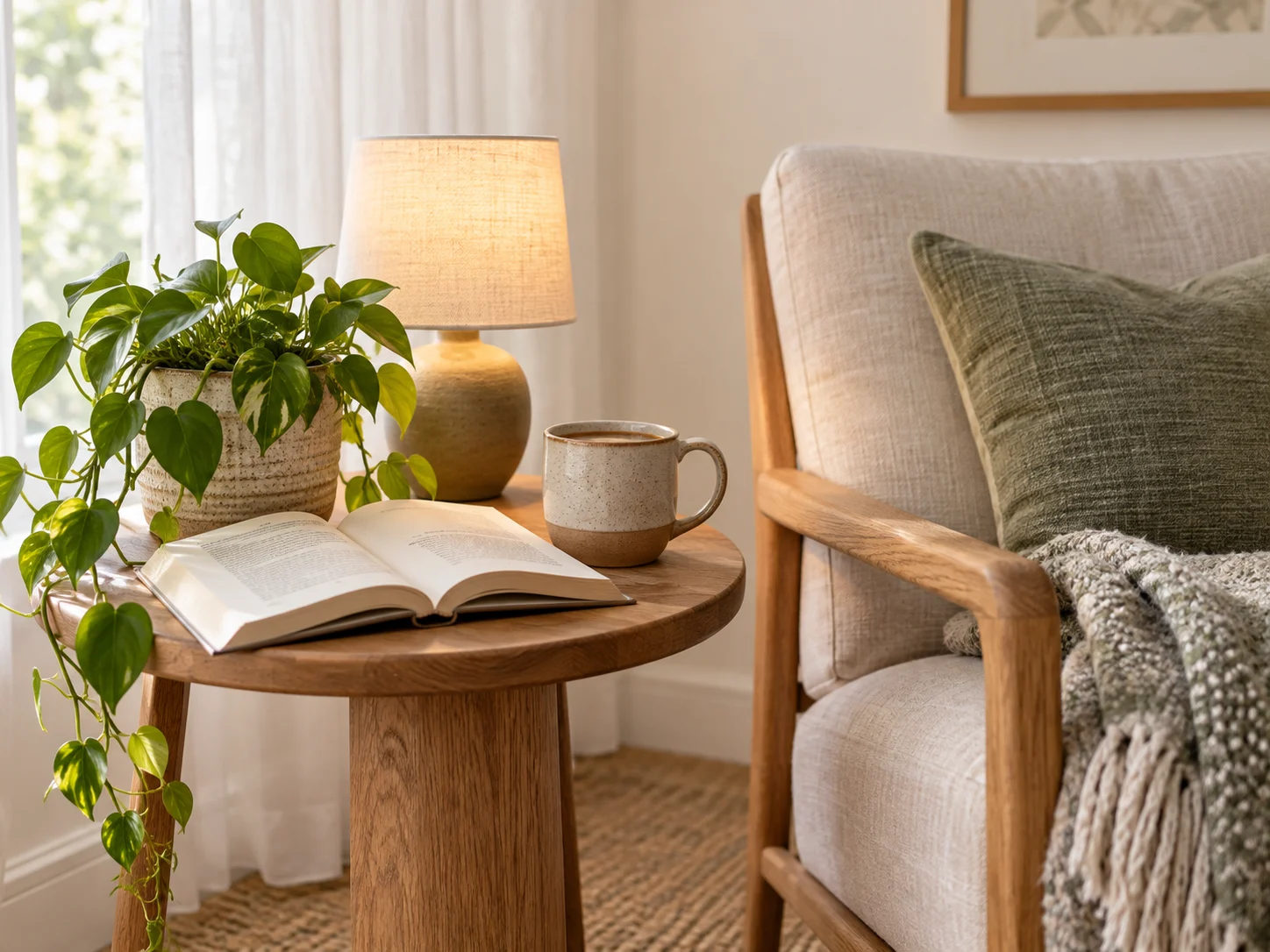
Bright does not have to mean harsh. The most comfortable corners combine ambient light, task light and a small amount of reflected light.
- Ambient light: use daylight or the room’s main fixture to keep the background even.
- Task light: add a floor or table lamp close enough to read by without leaning forward.
- Reflected light: let a pale wall, linen shade or softly reflective surface bounce light back into the corner.
Warm bulbs are often easier to live with in the evening, while a brighter neutral bulb can help during daytime tasks. If the corner looks grey at night, move the light source closer before buying a brighter bulb. A lower, warmer pool of light usually feels more intentional than a ceiling light turned all the way up.
3. Keep the palette quiet, then add one note of contrast
A calm corner does not need to be entirely beige. Start with two or three related neutrals—warm white, sand, pale oak or muted sage—then add one deeper or warmer note for definition. A charcoal frame, an olive cushion or a small terracotta vessel can give the eye somewhere to land.
Repeat one colour twice rather than scattering five unrelated accents. For example, a muted green cushion can echo a plant, or a brass lamp can echo a small picture frame. Repetition makes a small area feel collected without making it busy.
4. Add one tactile anchor
Texture gives a small space depth when there is not room for many objects. Choose one tactile anchor that makes the corner feel good to use: a linen cushion, a woven throw, a wool rug or a ceramic mug with a comfortable handle. Keep the rest of the surfaces relatively simple so the texture can do its work.
Think about the first thing your hand touches. A soft armrest, a smooth wooden table and a blanket within reach make the corner feel ready, not staged. Practical comfort is part of the design.
A corner feels finished when it is easy to use and easy to reset—not when every inch is decorated.
5. Make the corner easy to reset
Small zones stay calm when everyday items have a landing place. Give the book a shelf or tray, the remote a small bowl, and the throw a hook or basket. Choose containers that are open enough to use quickly. If putting something away takes three steps, it will probably remain on the chair.
Once a week, remove anything that does not belong to the corner. Two minutes of editing is more effective than adding another storage box. Leave one clear surface and one small area of empty floor; those pauses make the whole room feel lighter.
6. Use vertical space without filling it
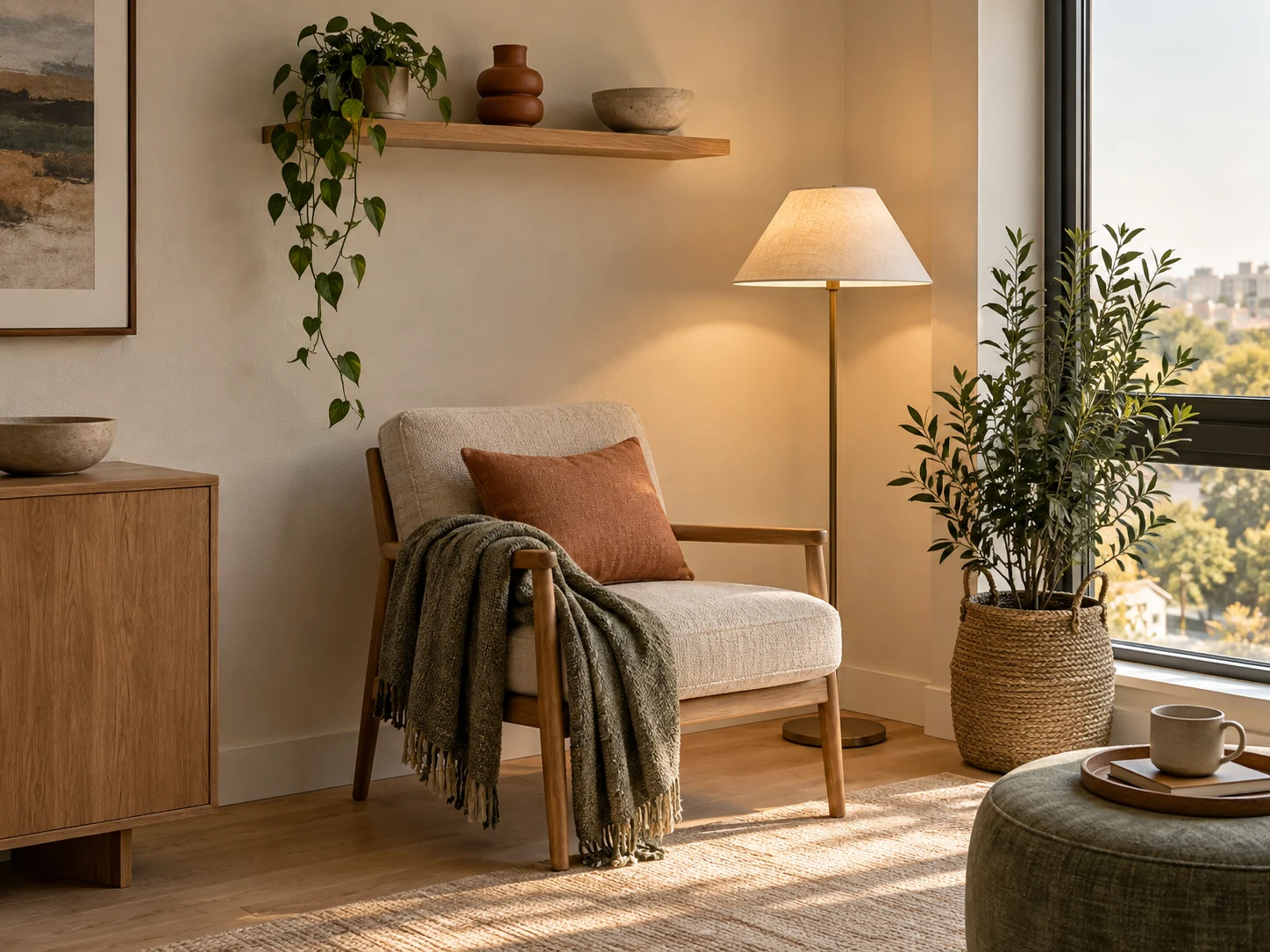
A narrow shelf or a tall plant can draw the eye upward and make a corner feel more considered. Keep the vertical arrangement simple: one shelf, a few useful objects and enough wall showing around them. A single large print often feels calmer than a cluster of small frames competing for attention.
If you rent, use a leaning mirror, a slim bookcase or a tall basket instead of drilling into the wall. Height is useful, but breathing room is what keeps the corner from feeling heavy.
A simple 20-minute corner reset
- Clear the corner completely and wipe the surfaces.
- Place the main seat where the daylight or view is most pleasant.
- Add one lamp and test it from the seated position.
- Bring back one useful surface, one comfort layer and one living element.
- Hide cables, remove duplicates and take one photo from the doorway.
That last photo is helpful because it shows the corner the way a guest sees it. If your eye jumps between too many objects, remove one. If the space feels cold, add texture or a warmer pool of light before adding colour.
What to skip when you want a calmer result
- Do not buy several small decorations before deciding how the corner will be used.
- Do not rely on a single overhead light for reading or winding down.
- Do not push furniture into a walkway just to make the corner look symmetrical.
- Do not fill every shelf; empty space is part of the composition.
Frequently asked questions
How can I make a dark corner feel brighter?
Start by clearing the area near the window and using a light-coloured shade or wall behind the seat. Add a lamp at seated eye level, then use a pale textile or framed print to reflect a little light. These changes usually make more difference than adding many bright accessories.
What is the best light for a reading corner?
The best reading light is close, adjustable and comfortable from your actual sitting position. A shaded floor lamp beside the chair or a table lamp aimed over the shoulder can work well. Test for glare on the page before choosing a higher-output bulb.
How many objects should be in a small calm corner?
There is no perfect number, but a useful starting point is one seat, one light, one surface, one comfort layer and one living or natural element. Add only what supports the corner’s job.
The small edit that changes the whole room
A calmer, brighter corner is less about buying a new look and more about giving a small area a clear rhythm. Choose the purpose, guide the light, repeat a quiet palette and keep the reset easy. When the corner works for your real routine, the rest of the room often feels more considered too.