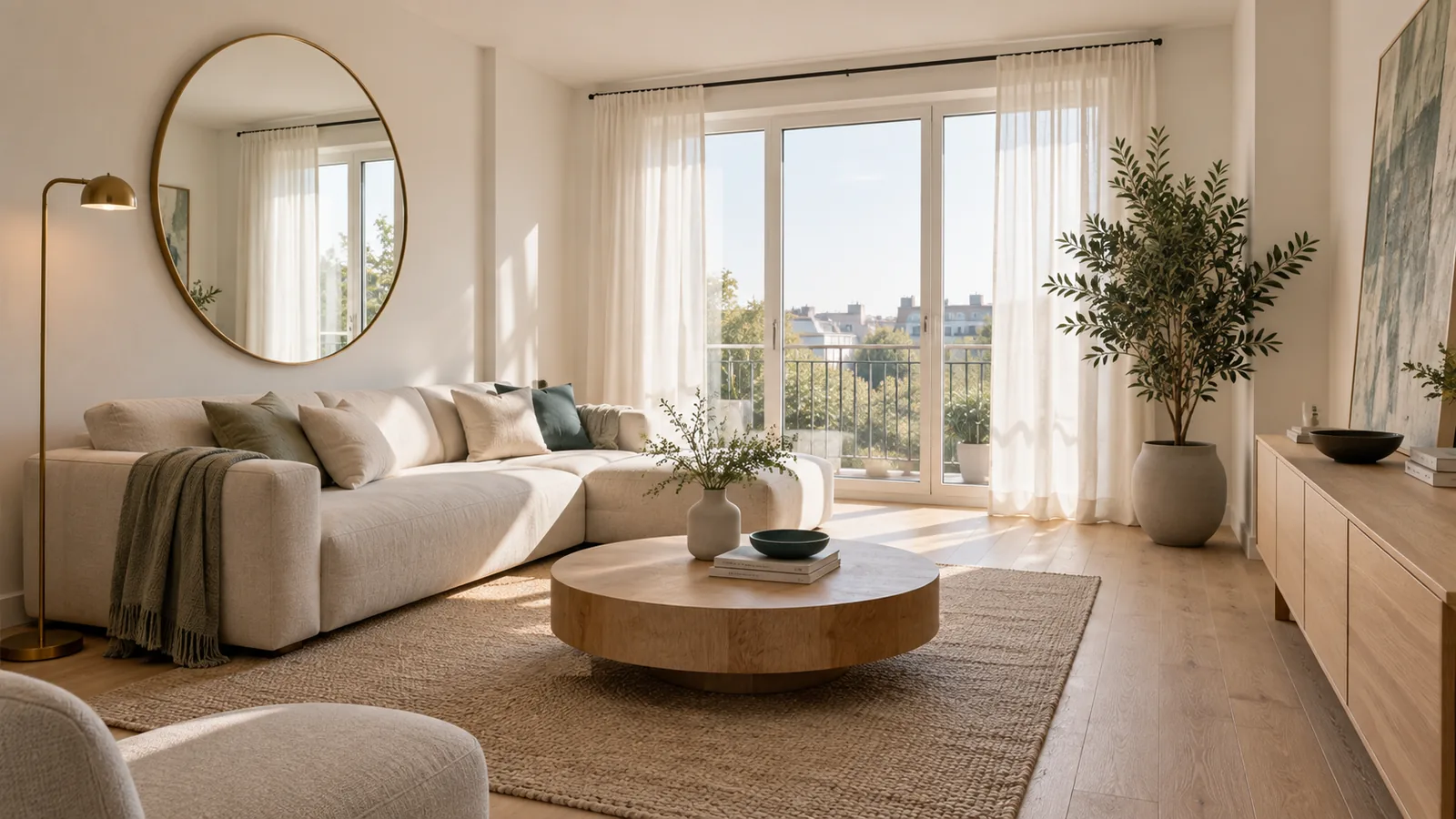
Short answer: to make a small living room feel bigger, protect the walking path, give the eye one clear focal point, and use light and storage to keep the floor visually quiet. This guide shows how to make a small living room feel bigger with practical edits rather than a renovation. You do not need a room full of tiny furniture; a few deliberate changes can make the same square footage feel calmer, brighter, and easier to live in.
Small rooms are often treated like a puzzle: add a mirror, choose pale paint, buy a smaller sofa. Those tips can help, but the better question is what is the room asking your eyes to process? If every surface is busy, every piece sits at the same height, and the main path is interrupted, the room feels tight even when the measurements are generous.
Make a small living room feel bigger
Before changing colors or shopping for storage, walk through the room the way you normally do. Notice where your knees turn, where you reach around a coffee table, and where a chair makes the route feel awkward. That route is the room’s visual and physical backbone.
Move the largest pieces first. A sofa that sits a few inches away from a doorway or a coffee table that floats in the middle of the route can make the whole room feel smaller. Try aligning the main furniture with the longest clean wall, then leave one simple path from the entrance to the window or the next room.
Do not push every piece against a wall by default. A little breathing room behind a sofa can make the layout feel intentional, while a fully wall-hugging arrangement can leave an unusable island of floor in the middle. Test two or three layouts with masking tape before you lift anything heavy.
2. Give the eye one visual anchor
A room feels spacious when the eye knows where to land. Choose one anchor: a large round mirror, a calm piece of art, a sculptural light, or the view through a window. Let the rest of the room support that anchor instead of competing with it.
A mirror works best when it reflects something pleasant and bright. Place it where it can catch daylight or a lamp, not where it doubles a pile of laundry or a crowded shelf. The goal is not to create an optical trick; it is to extend the sense of light and give a narrow wall more depth.
3. Lift storage up the wall
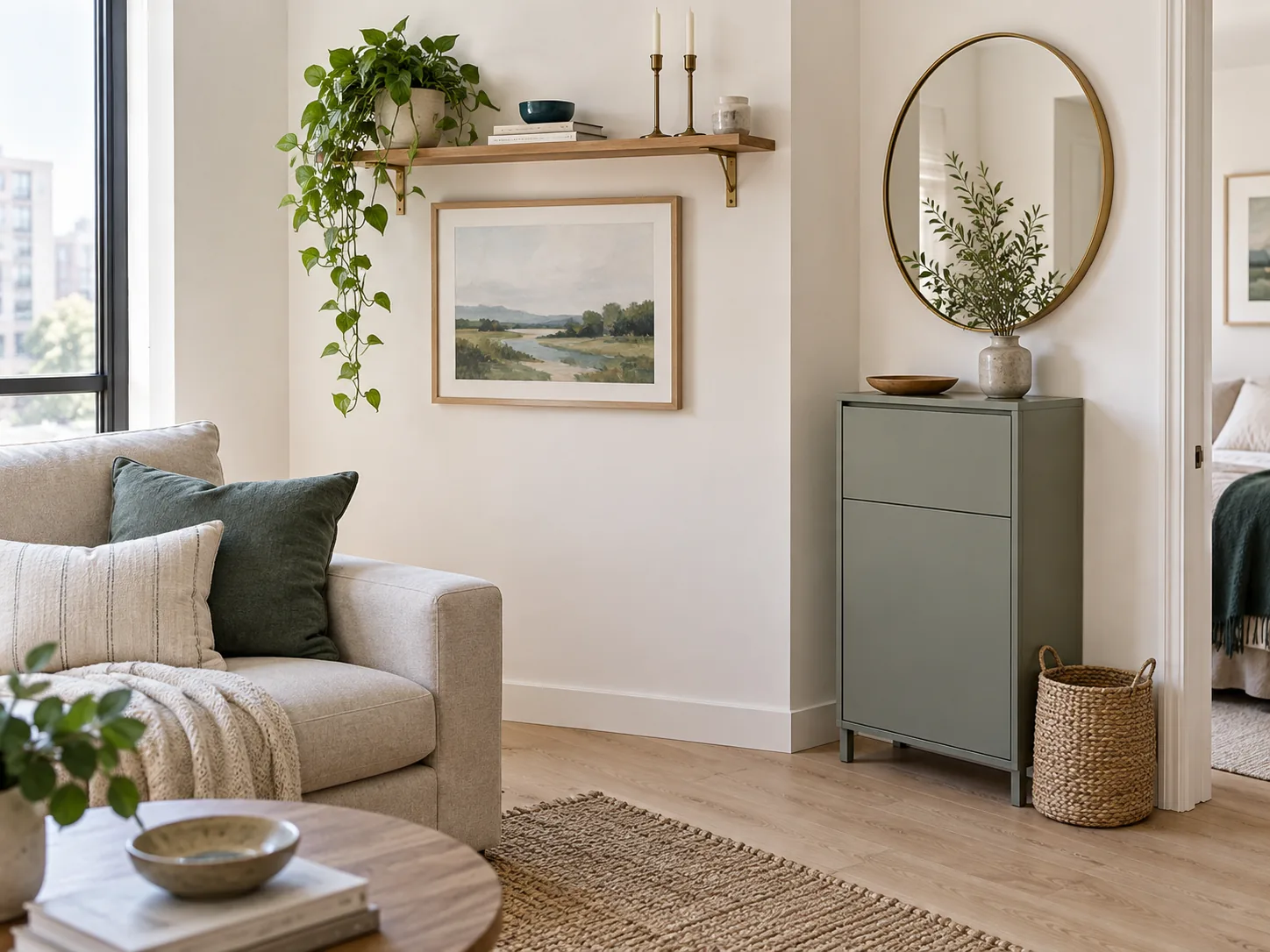
Floor clutter is often what makes a compact living room feel crowded. Move some of the visual weight upward with a narrow shelf, a tall cabinet, or wall-mounted hooks. Vertical storage gives everyday objects a home without expanding the footprint of the room.
Keep the arrangement edited. One long shelf with a few useful objects usually feels lighter than several small shelves packed edge to edge. Leave small pockets of empty wall between groups so the eye can read the architecture.
For a rental, choose freestanding pieces with a slim depth or removable hooks rated for the load you need. Measure the depth before buying; a cabinet that is only slightly too deep can steal the walking path you just created.
4. Let light travel across the room
Natural light is helpful, but the way you distribute light matters just as much. Heavy curtains, a tall plant in front of the window, or a dark piece of furniture can stop light at the edge of the room. Use sheer or lightweight window treatments and keep the area closest to the glass visually simple.
Then build a small layer of evening light: a floor lamp beside the sofa, a warm wall sconce, or a low lamp on a console. Several gentle sources make the room feel deeper than one bright ceiling fixture. Aim light at a wall or a textured surface so the room has soft variation rather than hard glare.
5. Build a quiet color story
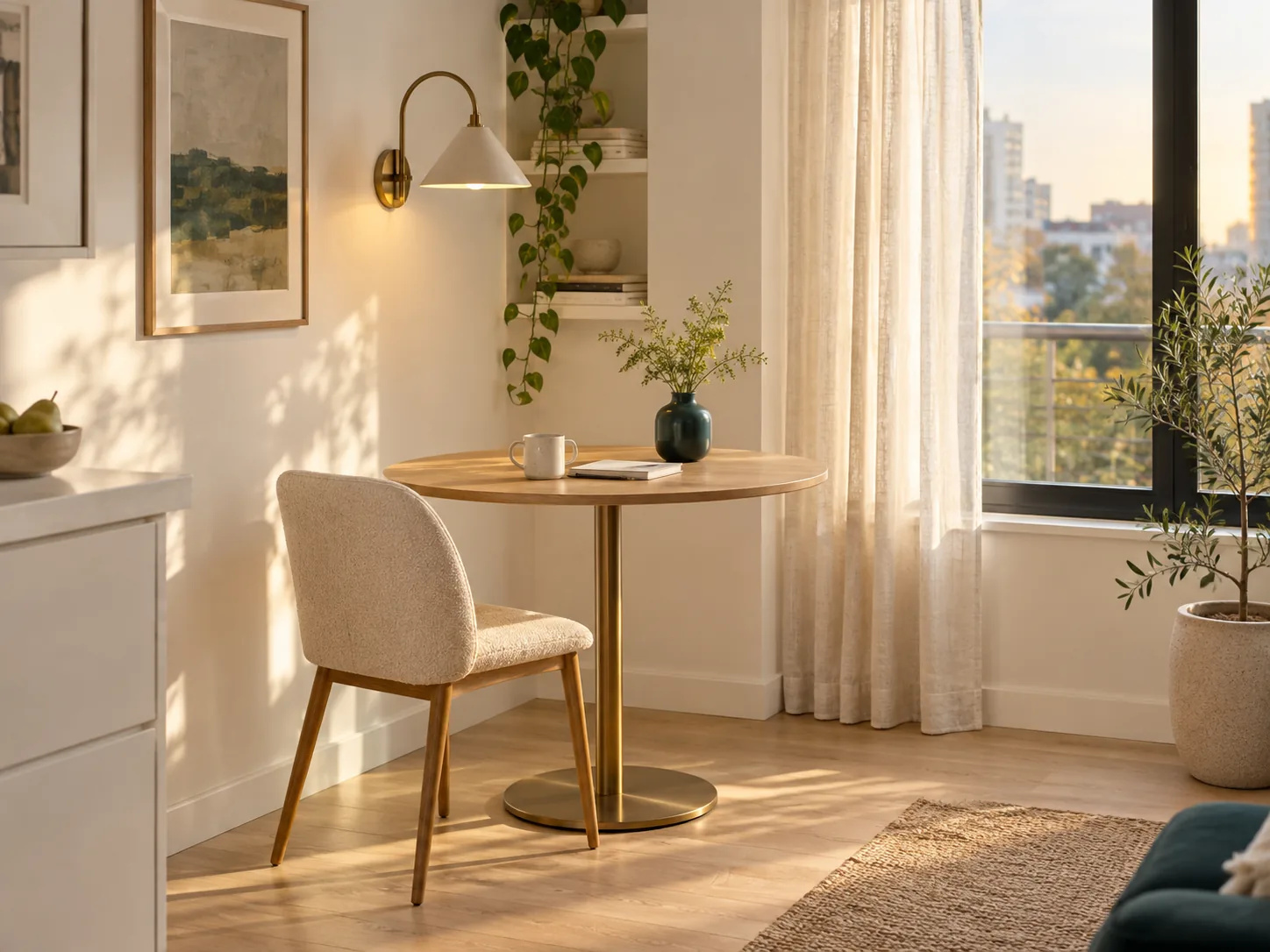
You do not have to paint everything white. A small room usually feels more coherent when the walls, larger upholstery, and window treatment share a close family of soft tones. Warm white, sand, pale oak, and muted green can sit together without creating hard visual stops.
Add contrast in a few deliberate places: a dark lamp, a framed print, or one deep-toned cushion. Repeating the same accent twice is often enough. When every accessory introduces a new color, the eye keeps starting over and the room loses its sense of air.
6. Let the floor do less work
Furniture with visible legs exposes more floor and makes the room easier to scan. A low-profile sofa, an open-base coffee table, or a console on slim legs can feel lighter than a bulky piece that meets the floor with a solid block.
Choose one rug large enough to connect the main seating pieces, rather than several small mats that break the floor into islands. Keep the rug simple in tone and texture. A quiet base lets the room’s proportions do the work.
7. Edit by zones, not by possessions
Every object can be useful and the room can still feel full. Group items by the activity they support: reading, conversation, listening to music, or working for a short stretch. Give each zone one surface for the essentials and a place to put them away.
Try a five-minute edit at the end of the day. Return stray objects to their zone, remove anything that belongs in another room, and leave one surface clear. Small rooms reward this rhythm because a little visual noise takes up a large percentage of the view.
The goal is not to make every object tiny. It is to make every object earn its place.
A 15-minute reset plan
- Take a quick photo from the doorway; it reveals clutter your eyes have learned to ignore.
- Clear the main walking path and move only the largest piece first.
- Choose one anchor and remove two items competing with it.
- Open the window area and move anything blocking the light.
- Put the remaining objects into three zones: keep here, move elsewhere, and decide later.
Frequently asked questions
Should every piece of furniture be small?
No. A room with too many tiny pieces can feel busier than a room with one well-proportioned sofa and a simple side table. Prioritize a clear path and a small number of pieces that do more than one job.
Are mirrors always a good idea in a small living room?
Only when they reflect light or a pleasant view. A mirror facing clutter can make the room feel twice as busy. Try a temporary placement first and look at it from the doorway and the sofa.
What should I remove first?
Start with anything that interrupts movement, blocks a window, or has no clear home. Those three categories create the biggest improvement with the least effort.
The takeaway
A small living room feels bigger when it is easy to read. Protect the path, choose a clear anchor, use the walls and light well, and edit in small passes. The result should not feel empty; it should feel considered.
For more practical, low-pressure ideas for the home, explore the Vemarino guides or learn more about our editorial approach on the About Vemarino page. For professional design resources, browse the American Society of Interior Designers.
Leave a Reply